Starting your career becomes much easier when you have a clear, well-structured resume. Your resume is the first thing employers notice, and it often decides whether you get an interview call or not. For freshers and students, building a resume is not about showcasing experience; it’s about highlighting your skills, projects, achievements, and potential.
Creating a strong resume for freshers or a simple and effective resume for students can feel challenging, especially when you have little or no work experience. That’s why it’s important to focus on the right resume structure, clear formatting, and the sections that truly matter. A well-designed resume for freshers shows that you are ready to learn, adapt, and grow in a professional environment. Similarly, a thoughtfully written resume helps you present your strengths, academic background, and project work in a clean and impactful way.
In this blog, you’ll learn everything about how to make a resume, whether you’re applying for internships, part-time jobs, or your first full-time role. The tips shared here are simple, beginner-friendly, and easy to follow, helping you create a job-ready resume that stands out without any confusion.
1. What Is a Resume?
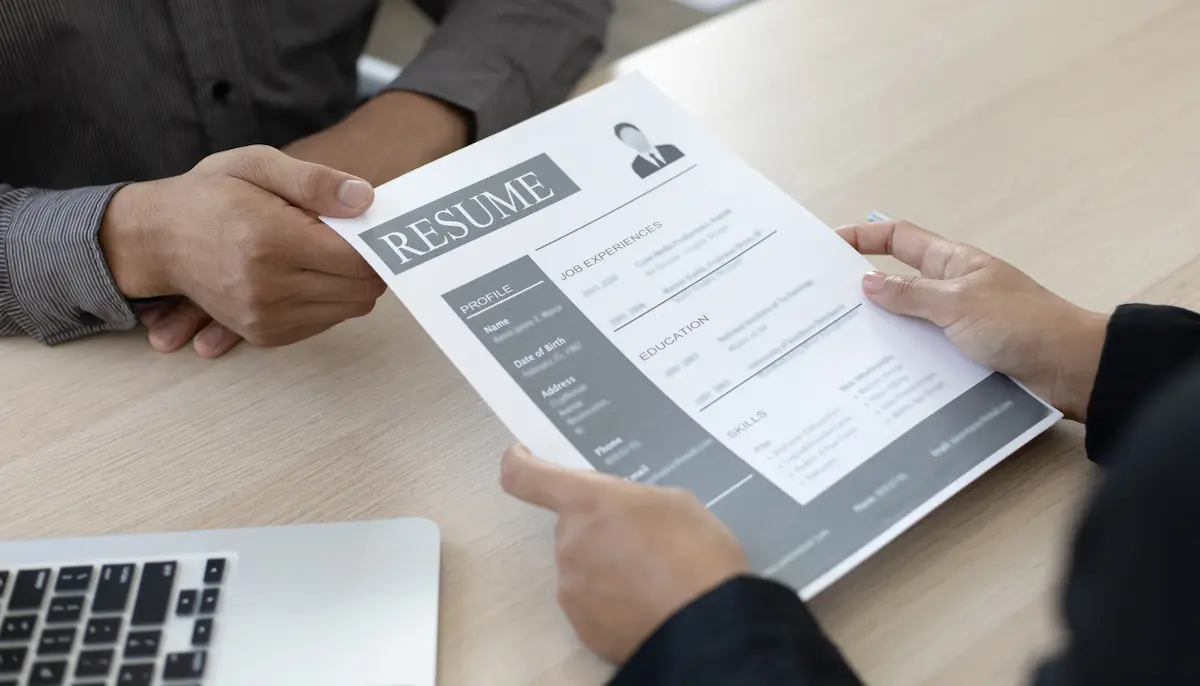
Imagine you are meeting an employer for the first time, but you can’t speak. Your resume speaks for you.
A resume is your personal advertisement, your mini-story, and your first impression, all on one page.
It shows the employer who you are, what you can do, and why you deserve a chance.
For freshers and students, a resume is not about past jobs; it’s about showing your potential.
A powerful resume for freshers or students shares:
- Your education – what you have learned so far
- Your skills – what you’re naturally good at
- Your projects – how you’ve used your knowledge in real life
- Your achievements – moments you’re proud of
- Your goals – where you want to go next
Think of your resume as a passport to opportunity.
If it’s clear, clean, and impressive, it can open doors to internships, part-time jobs, and your dream first job.
2. Why Do Students and Freshers Need a Resume?
You might wonder, ‘I’m a fresher… do I really need a resume?
Yes! Absolutely.
Your resume is the key that unlocks your first career opportunity.
Even if you’ve never worked before, your resume helps you:
- Get internships that give you real-world experience
- Apply for part-time jobs while studying
- Stand out in college placements
- Show employers that you’re ready to learn and grow
Think of it this way:
A strong resume for students is like your entry ticket to the professional world.
“It helps employers see that, even without prior experience, you are ready to learn and contribute effectively.”
A clean, simple, and well-structured resume doesn’t just look good… It makes you look serious, confident, and ready for your first big opportunity.
3. CV or Resume: How Are They Different?
Think of a resume and a CV like two kinds of backpacks:
- A resume is a small, neat backpack you carry to school – just the things you need for one trip.
- A CV is a big travel bag with everything you own if you’re moving countries, long, detailed, and full of history.
Both tell your story, but they do it in different ways.
CV vs Resume: What’s the Difference?
| Feature | Resume | CV |
| Length | 1 page (sometimes 2) | Multiple pages |
| Main use | Jobs, internships, placements – best for freshers and students | Academic jobs, research, grants, detailed profiles |
| Focus | Skills, projects, achievements, quick impact | Full history: education, research, publications, full work history |
| Best for | Hiring managers and recruiters (fast read) | Committees and academic reviewers (deep read) |
| Format | Short bullets, highlights, tailored per job | Detailed sections, chronological, exhaustive |
| When to choose | Applying for internships, part-time jobs, first job – resume for job seekers | Applying for PhD, academic posts, research grants |
| Design | Clean, ATS-friendly, one-page | Can be longer, more detailed layout |
| How often to update | Often, tailor per job | Update when you add major new work or publications |
When should you use which?
If you are a student or a fresher looking for internships, part-time work, campus placements, or your first job → use a resume.
If you are applying for a research role, academic job, or fellowship that asks for a full academic history → use a CV.
Short rule: Most students and freshers will need a resume, not a CV.
Let’s understand this with an example
- Priya is a 2nd-year B.Tech student applying for a software internship. She needs a resume with skills, 2 projects, and a course certificate.
Use a Resume.
- Rahul finished an M.Sc. and has published papers. He applies for a research post. He needs a full academic record.
Use a CV.
How to Convert CV to Resume (If you already have a long CV)
- Pick the top 1-2 pages of your CV that matter most for the job.
- Keep only relevant projects, skills, and the latest education.
- Use short bullet points and action words.
- Make it look clean and ATS-friendly.
This is helpful if you’re changing from research to industry or if you already have a long school/college portfolio.
Pro Tips for Freshers & Students
- Always tailor: change 1-2 lines in your resume to match the job description.
- Use words from the job ad – ATS systems look for keywords.
- Keep a master CV (detailed) and create short resumes from it for each job.
Save a resume sample for freshers or resume examples for freshers to copy structure and wording.
For most students and freshers, a resume is the right choice – short, clear, and job-ready. Use a CV only when the role asks for full academic or research history.
4. Best Resume Formats for Freshers

Choosing the right resume format is like choosing the right outfit for an interview – the better it fits, the stronger your first impression.
Imagine three friends walking into a job fair.
Each one uses a different resume format for freshers.
Let’s see who makes the best impact!
1. The Skills Hero – Functional Format (BEST for Freshers)
Meet Aarav, a college student with zero job experience – but amazing skills.
His resume doesn’t talk about past jobs (because he has none).
Instead, it highlights:
- His skills
- His academic projects
- His coursework
- His strengths
This format is perfect for freshers and students, because it shows what you can do, not what you’ve already done.
If you are learning how to make a resume without experience, this is your best friend.
2. The Balanced Achiever – Combination Format
Next is Neha, a student who has done a few projects, joined clubs, and has strong skills.
Her resume mixes:
- Skills
- Education
- Projects
- Certifications
It’s like the perfect combo meal, everything important in one place.
This format works well for:
- Students
- First-time job seekers
- Internship applicants
If you’re preparing a resume for job seekers or want a smart student resume format, this one is ideal.
3. The Experience Collector – Chronological Format
Lastly, meet Rohan, who has internship experience and a part-time job.
His resume lists everything in order, newest to oldest.
This is great for people with work history.
BUT…
- Not recommended for most freshers
- Not helpful if you’ve never worked before
A chronological resume works best for experienced candidates – not for beginners.
5. Sections That Make a Resume Stand Out for Freshers and Students
Imagine you’re walking into a company for your very first interview.
You’re nervous… excited… and hoping they’ll notice your talent.
But here’s the truth: your resume walks in before you do.
It tells your story, shows your strengths, and convinces the employer to say,
“Hmm… this student looks promising. Let’s call them in.”
To help you build a powerful resume for freshers or a clean resume for students, think of your resume as a small book about you — and each section is a chapter that matters.
Let’s build this “book” together, step by step.
1. Contact Information – Your Front Cover
Just like a book cover tells you the title and author, your contact section quickly tells the employer:
Your full name
Your phone number
Your email
Your LinkedIn (optional)
Keep it simple. Clean. Easy to read.
A good start makes your whole resume look more professional.
2. Resume Headline – Your Tagline
Every great story has a strong opening line.
Your headline is that one sentence that makes the employer think,
“This student knows exactly what they want.”
Examples:
- “BCA Fresher Looking for IT Internship”
- “Commerce Student with Strong Excel Skills”
Short, sharp, and straight to the point.
3. Career Objective – Your Introduction Chapter
This is where you briefly tell the employer:
- What you want to learn
- What skills you want to grow
- How can you add value
A good career objective shows that even as a fresher, you have direction and motivation.
Example:
“Hard-working BBA student seeking a marketing internship to apply classroom knowledge and help with practical campaign tasks.”
It shows your purpose and your potential.
4. Education – Your Academic Journey
For freshers and students, this is one of the strongest parts of your resume.
Include:
- Degree
- College/School name
- Year of completion
- CGPA/percentage (optional)
This section tells employers where your learning foundation began.
5. Skills – Your Superpowers
Every superhero has powers.
Your resume should show yours clearly, especially if you have no experience.
Add two types:
Technical Skills
(Excel, Python, HTML, Digital Marketing, Canva, Coding)
Soft Skills
(Teamwork, Communication, Time Management, Problem-Solving)
This is where your resume becomes ATS-friendly, increasing your chances of getting shortlisted.
6. Projects – Your Proof of Ability
Think of projects as short stories that show what you can actually do.
Even if you’re a complete beginner, projects can make your resume shine.
Include:
- Project title
- Tools or skills used
- What you built or achieved
For a resume for freshers, this section is pure gold.
7. Certifications – Your Bonus Chapters
These show that you’ve taken extra steps to learn new things.
Examples:
- Google Digital Marketing
- Excel Basics
- Python for Beginners
- Communication Skills Course
Certifications help your resume look polished and serious.
8. Achievements – Your Highlights Reel
This is where you proudly show off moments you’re proud of.
Examples:
- Won a school debate
- Secured top rank in a competition
- Completed a major college project
- Led a team in an event
Even small achievements show confidence and dedication.
9. Extra Activities – Your Personality Snapshot
Employers want to know the real you — not just the academic you.
Include:
- Sports
- Volunteering
- Cultural activities
- Club participation
- Social work
These small details help your resume for job seekers feel complete and human.
Each section of your resume is like a small chapter of your story.
When you arrange these chapters neatly and clearly, you create a resume that feels professional, confident, and ready for opportunities. Students and freshers don’t need experience; they need clarity, structure, and a bit of personality.
And guess what?
You just learned how to build exactly that.
6. How to Make a Resume (Step-by-Step Guide)
Imagine this:
You sit down to make your first ever resume.
The screen is blank. The cursor is blinking.
And your mind says, “Where do I even start?”
Don’t worry – let’s walk through this together like a simple journey.
By the end, you’ll know exactly how to make a resume that looks clean, professional, and ready to impress any employer.
Step 1: Choose a Clean, Simple Format – Your Resume’s Foundation
Think of your resume like a room.
If the room is messy, nobody wants to enter.
A clean format makes everything easy to read.
These two formats work best:
- Functional Format (Focuses on skills & projects)
- Combination Format (Mix of skills + education + projects)
These formats are used in most resume examples for freshers, because they highlight strengths instead of experience.
Step 2: Pick an ATS-Friendly Resume Template – Your Resume’s Gate Pass
Imagine this:
You finally create your resume.
You are excited.
You apply for a job.
You wait… and wait…
But you never get a reply.
Did the HR hate your resume?
No.
The HR never even saw it.
Why?
Because your resume got rejected before a human even opened it.
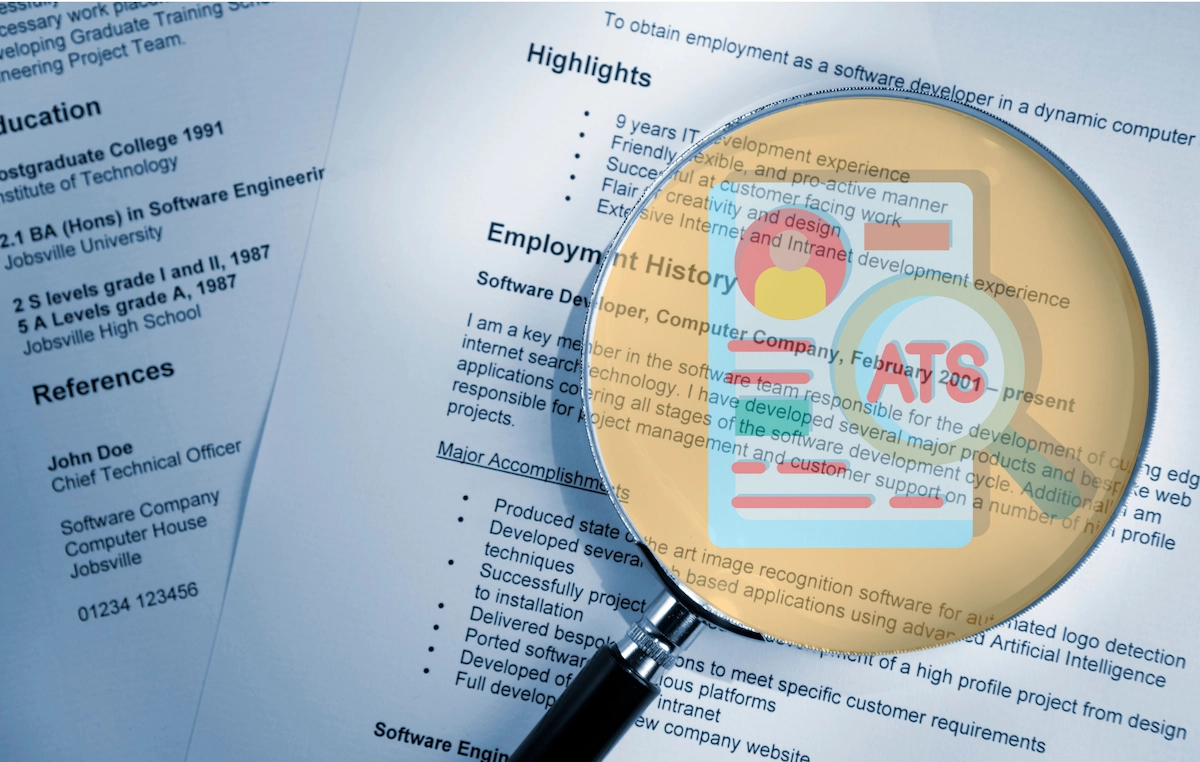
“Meet ATS, short for Applicant Tracking System – a tool companies use to read and shortlist resumes.”
What Exactly Is ATS?
Think of ATS as a security guard at the entrance of every company.
Thousands of resumes come in every day.
The HR says to the ATS guard:
“Allow only resumes that are easy to scan, simple, and clearly show the skills we’re looking for.”
So the ATS checks:
- Does the resume have simple formatting?
- Can the software read the text easily?
- Does it include the right keywords?
- Is the layout clean and professional?
If yes → Resume moves forward
If no → Resume gets rejected instantly
This is why students and freshers MUST use an ATS-friendly resume; it gives your resume a real chance to reach employers.
SO, ATS is a computer system that scans your resume to decide whether it should be forwarded to the recruiter or rejected. It checks keywords, formatting, and structure.
Why Students Get Rejected Without Even Knowing
Most freshers use:
- Too many colors
- Fancy designs
- Complicated tables
- Creative fonts
- Box-style layouts
These look “cool” to you…
…but the ATS guard can’t read them.
It’s like showing a resume written in invisible ink.
So What Works?
Use a clean, simple, professional format.
This means:
- Standard fonts like Arial, Calibri, or Roboto
- No unnecessary shapes or design boxes
- Simple headings
- Left-aligned text
- Clear sections like skills, education, projects
A clean template increases your chances of getting past the ATS and reaching real HR eyes.
This is why ATS-friendly resume templates are a must in any resume for students, especially when you’re learning how to write a resume without experience.
Quick Example
Imagine two resumes walk into a company:
- Resume A (Fancy One):
Colorful, with circles and icons everywhere.
ATS says:
“Sorry bro… I can’t read this mess.”
Rejected. - Resume B (Clean & Simple):
Professional, clear, keyword-rich.
ATS says:
“Perfect! Come in.”
Accepted. Sent to HR.
The lesson?
A simple design wins over a fancy one, every time.
Step 3: Write a Short Career Objective or Summary – Your Opening Line
This is where you introduce yourself in one or two lines.
Good example for freshers:
“Highly driven B.Com fresher ready to apply analytical thinking and communication skills in a real workplace environment.”
This is an important part of learning how to write resume without experience.
A strong career objective for resume instantly shows your purpose.
Step 4: Add Your Skills Clearly – Your Strengths on Display
Imagine an employer scanning your resume in 10 seconds.
What do they look for first?
Your skills.
Add both:
- Technical skills (Excel, HTML, Python, Digital Marketing)
- Soft skills (Teamwork, Problem-solving, Time management)
This section makes your resume for job seekers stand out even if you’re a beginner.
Step 5: Add 2-3 Projects – Your Mini Experience
If you have no work experience, projects are your “proof of work.”
They show that you can apply your knowledge.
Example:
Project: Social Media Strategy for College Fest
Skills Used: Canva, Instagram Insights
Result: Improved engagement by 45%
Good projects make your resume look like a sample resume for freshers employers love.
Step 6: Add Your Education – Your Base Strength

Always list your latest education first.
Example:
BBA (2021-2024)
XYZ University
A resume for students, this section is extremely important because it replaces work experience.
Step 7: Add Certifications & Achievements – Your Bonus Points
Employers love learners.
Add online courses, workshops, or achievements like:
Google Digital Marketing Certification
Python Course
College competition winner
This makes your resume look complete and trustworthy.
Step 8: Proofread – Your Final Polish
A single spelling mistake can ruin your first impression.
Read your resume twice.
Fix spacing, fonts, and grammar.
Tiny details matter.
Step 9: Save as PDF – Your Professional Finish
Always save your resume as PDF unless the employer asks otherwise.
Use a clean file name:
YourName_Resume.pdf
This looks professional and tidy.
You can also offer a resume format for freshers PDF download on your site for users who want a ready-made format.
When you follow these steps, you don’t just learn how to make a resume; you learn how to build a confident, clear, and job-ready resume that stands out, even if you are a complete beginner.
7. How to Write a Resume Without Experience
Imagine this:
You’re sitting to create your first resume, but the page looks empty because you haven’t worked anywhere yet.
Most students feel the same, and that’s completely normal.
The good news?
A resume is not only about job experience.
It’s about showing your potential.
Here’s how students usually turn a blank page into a strong resume:
1. Start With Your Projects
Think of your college projects, class assignments, or personal mini-projects.
These show employers what you can do, even without a job.
2. Highlight Your Skills
Every fresher has skills – communication, MS Office, digital marketing, coding basics, designing, teamwork, anything.
Add both technical skills and soft skills clearly so employers can understand your strengths.
3. Add Online Courses You’ve Completed
Maybe you learned Excel from YouTube, or digital marketing from Google, or Python from Coursera.
These small steps show that you are serious about learning.
4. Share Your Achievements
Small wins matter:
a competition you participated in,
a school award,
or a certification you earned.
These add credibility to your resume.
5. Include Volunteering or Extra Work
Did you help at a college fest?
Teach someone?
Manage an event?
Anything that shows responsibility can go into your resume.
Conclusion
Even with zero experience, you can build a strong resume by focusing on what you have done, not what you haven’t done.
This is exactly how freshers create an impressive resume that stands out.
8. Resume Examples & Samples for Freshers
Here are different types of resumes beginners can make:
Sample Resume for Freshers
General format suitable for all fields.
Resume for Students with No Experience
Focuses on skills and projects.
Resume for Job Seekers
Best for candidates applying for their first full-time job.
Field-Specific Resume Examples
Engineering
IT
Commerce
Marketing
Arts
You can also add:
sample resume for freshers
Resume examples for freshers,
resume format for freshers, PDF download
on your website for better user experience.
9. ATS-Friendly Resume Tips for Freshers
Imagine you’re applying for your dream job.
You click Submit, take a deep breath, and wait…
But before your resume reaches the HR team, it meets a strict gatekeeper —
the ATS (Applicant Tracking System).
Think of ATS as a robot bouncer standing at the door of a job opportunity.
It scans every resume to decide who gets in.
Now, this robot doesn’t care about fancy colors or stylish borders.
It only cares about simplicity, clarity, and keywords.
To make sure the ATS lets your resume pass, follow these smart tricks:
Tip 1: Use Simple, Clean Fonts
Imagine reading a book written in a weird curly font — you’d get confused, right?
The ATS feels the same.
Stick to clean fonts like Arial, Calibri, or Roboto so the robot can read everything easily.
Tip 2: Keep Your Layout Neat
Pretend your resume is a room.
If the room is messy, the ATS gets confused.
Keep everything aligned, clear, and well-structured — just like a tidy desk before studying.
Tip 3: Add Keywords Naturally
The ATS loves keywords.
If you’re learning how to make a resume, match the skills and words from the job description.
It helps the system understand that you’re a good fit.
Tip 4: Avoid Tables, Shapes & Images
The ATS can’t read complex designs – they look like puzzles to it.
Avoid:
- Big tables
- Shapes
- Icons
- Profile photos
Keep it simple and professional, especially for a resume for job seekers.
Tip 5: Stick to Black-and-White
Colorful resumes may look cool to people, but the ATS may not read them properly.
A black-and-white layout ensures nothing breaks or gets hidden.
Why This Matters
When your resume is ATS-friendly, you don’t get rejected because of design
You get noticed for your skills, projects, achievements, and potential.
This simple approach gives freshers a real chance to shine, even before the HR team sees their resume.
10. Resume Writing Tips for Students & Freshers
Imagine you are sitting in front of your laptop, trying to make your first resume for freshers. You type a few lines… delete them… type again… and still feel unsure.
Don’t worry – every student goes through this moment.
But here’s the good news: with a few smart resume writing tips, you can turn your simple resume into a clean, professional, and impressive one.
Think of your resume like your first college presentation.
To make it perfect, here’s what you should keep in mind:
- Keep it to 1 page – just like a good movie trailer, short and powerful.
- Use short sentences – employers love clarity.
- Use bullet points – they make your resume easier to read.
- Add numbers wherever possible – like “Completed 3 projects” or “Improved team presentation by 20%.”
- Don’t lie or exaggerate – honesty builds trust.
- Keep spacing neat – a clean layout feels more professional.
- Double-check grammar – small mistakes can leave a big impression.
These simple habits can make your resume look polished and confident – the kind employers love to read.
11. Final Checklist Before Sending Your Resume

Meet Aarav, a final-year student about to send his first resume for an internship. He’s excited but also a little nervous; he wants to make sure everything is perfect. Here’s how he goes through his final checklist:
- Objective is short and clear – Aarav reads his opening line and asks, “Does this tell the recruiter exactly who I am and what I want?” Perfect!
- Skills are easy to read – He scans his skills section. Bold headings, bullet points, everything pops out clearly.
- Projects show real work – Aarav double-checks that his projects highlight actual achievements, not just tasks.
- No spelling mistakes – He runs a quick spell-check and carefully reads it one more time. Typos? None.
- Format looks clean – Everything is neatly aligned. Sections are clear, and the page doesn’t look crowded.
- File name is professional – He saves it as Aarav_Singh_Resume.pdf. Simple, clean, professional.
- After this quick walkthrough, Aarav takes a deep breath. His resume for freshers is polished, professional, and ready to impress recruiters.
- Remember, your resume is like a first handshake on paper; make it count!
Conclusion

Starting your career can feel overwhelming, but your resume is your first step toward success. Imagine it as a personal story on paper, showcasing your skills, projects, achievements, and potential in a way that employers can instantly understand.
Even without prior experience, a clear and professional student resume format can help you stand out. By highlighting your strengths, using a concise career objective for a resume, and creating an ATS-friendly resume, you give yourself the best chance to land internships, part-time jobs, or your first full-time role.
At the end of the day, a well-crafted resume is more than a document; it’s your ticket to opportunities. Start small, stay focused, and let your first resume for freshers open the door to your career journey.
Also Read: What is Digital Marketing?